
Venezuela is navigating an unprecedented political moment following the January 3 capture and extraction of president Nicolás Maduro and his wife, lawmaker Cilia Flores, by U.S. forces in Caracas. Two days later, senior government official Delcy Rodríguez assumed the role of interim president, marking a sudden and contested transition of power.
In the weeks that followed, authorities began a gradual process of releasing political detainees, which NGOs say has resulted in 383 excarcerations out of more than 820 political prisoners registered nationwide, most of them subject to restrictive precautionary measures rather than full release.
On January 30, Rodríguez formally presented a draft Amnesty Law for Democratic Coexistence (Proyecto de Ley de Amnistía para la Convivencia Democrática), which the National Assembly approved in a first debate on February 5. Parliament Speaker Jorge Rodríguez, her brother and a key figure in the ruling bloc, later said that all political prisoners would be freed “no later than Friday (February 10)” once the bill is passed in a second and final vote.
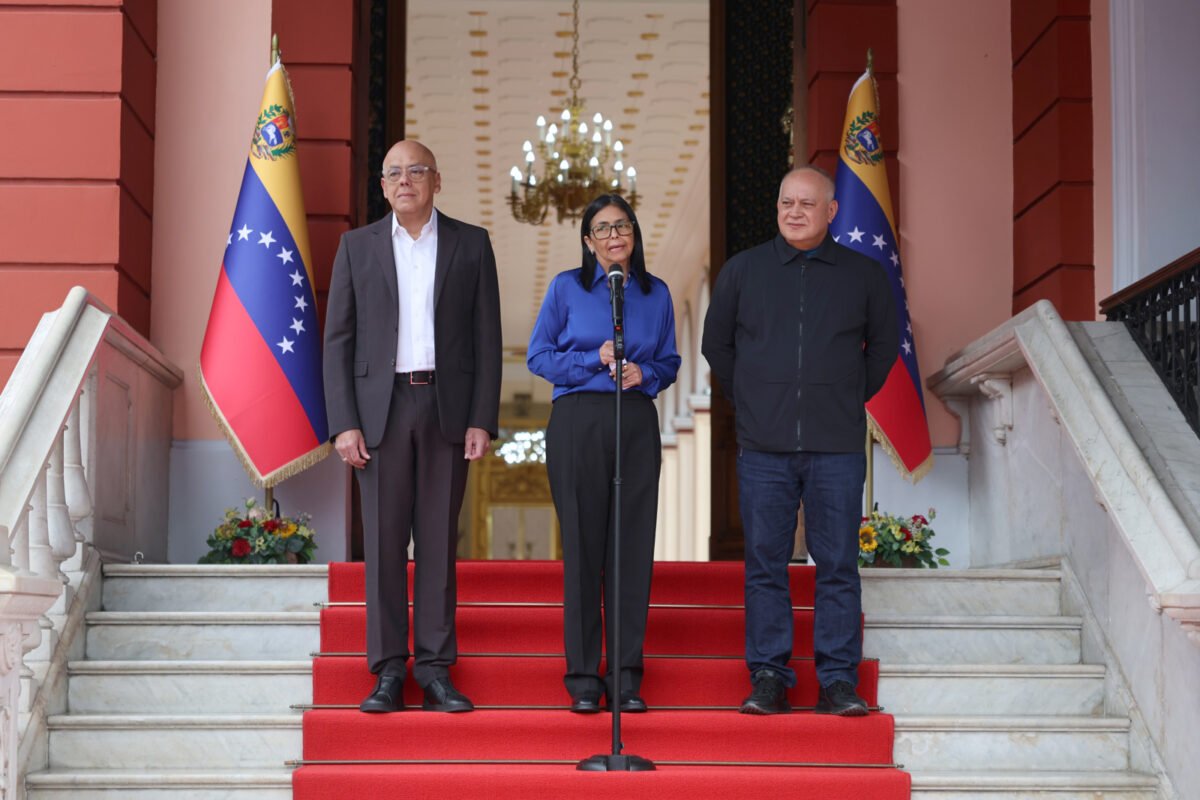
EFE/Miguel Gutiérrez
Yet despite those assurances, opposition leaders, legal experts, and human rights organizations warn that the proposed law contains structural shortcomings that could severely limit its effectiveness and fail to dismantle the system that enabled political persecution in the first place.
What the Amnesty Law Proposes
The draft legislation consists of 13 articles and seeks to grant a general amnesty to individuals prosecuted or convicted for political crimes or related offenses committed since 1999, but limited to ten specific periods officially classified as episodes of “political violence,” spanning events from the early years of the Hugo Chávez government through post-election unrest in 2024.
According to the draft, the law provides for:
However, the bill explicitly excludes cases involving:
Serious human rights violations
Crimes against humanity and war crimes
Intentional homicide
Serious drug trafficking
Crimes against public assets
Crucially, the law does not establish automatic release. Instead, it states that the competent court, at the request of either the Public Prosecutor’s Office (Ministerio Público) or the detained person, must verify whether each case meets the conditions for amnesty and then order either the dismissal of proceedings or the revision of final sentences.
Political Promises vs. Judicial Control
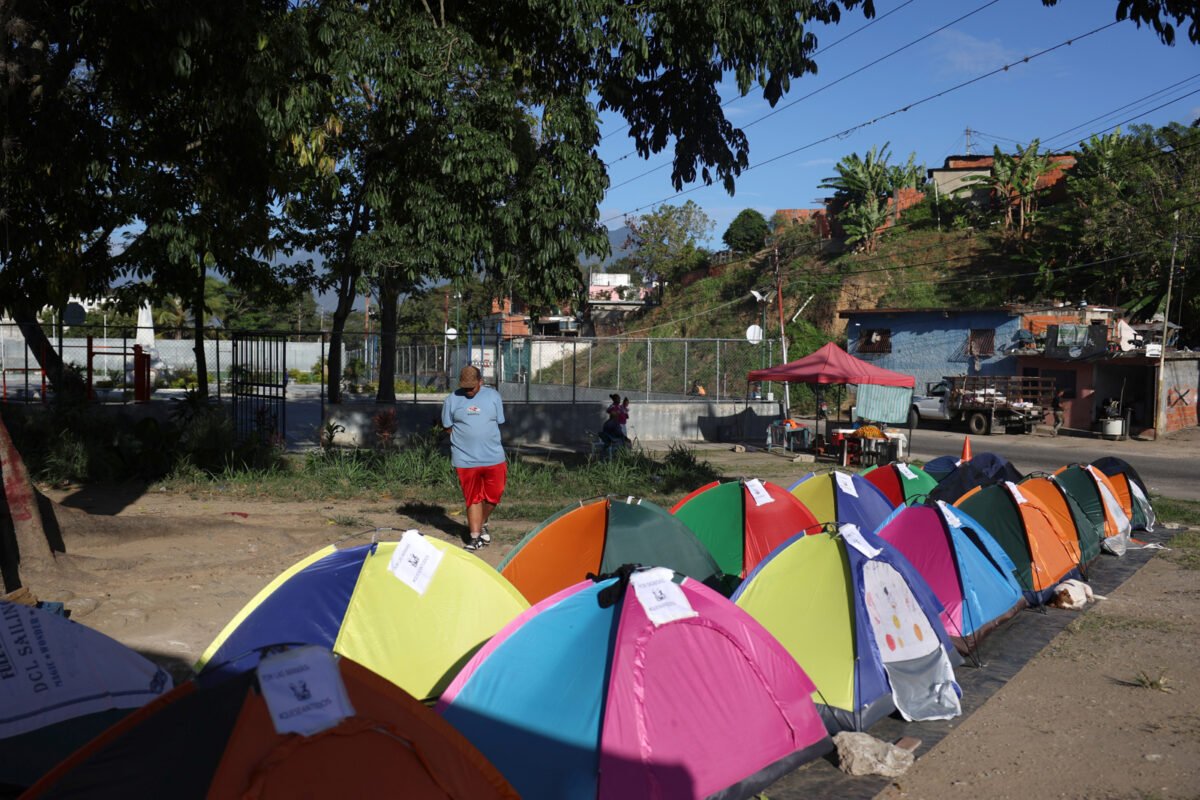
Despite this legal framework, National Assembly Speaker Jorge Rodríguez publicly promised swift and total releases. Speaking to relatives of detainees outside Zona 7, a police detention center in eastern Caracas where families have held a permanent vigil for over a month, Rodríguez said that once the law is approved in its second debate, “everyone will be free the same day.”
The opposition coalition Plataforma Unitaria Democrática (PUD) described it as “deeply concerning” that the implementation of amnesty would remain under the authority of the Public Prosecutor’s Office and the current justice system, institutions widely accused of having acted as instruments of political persecution.
“There can be no reconciliation in a process where the freedom of the persecuted depends on those who ordered, carried out, or validated their imprisonment,” the PUD warned.
A Narrow Scope Based on Preselected Political Episodes
Former lawmaker Delsa Solórzano, president of the opposition party Encuentro Ciudadano, said on X that the draft law is “deeply incomplete and potentially dangerous.”
The draft law does not guarantee the safe return of exiles, does not lift political disqualifications, and does not establish mechanisms for comprehensive reparations for victims,” Solórzano said.
Under the text of the bill, the amnesty is strictly limited to ten specific political episodes, officially framed as moments of “political violence.” These include:
The 2002 coup attempt
The 2002–2003 oil strike
Protest waves in 2004, 2007, 2014, 2017, and 2019
Episodes linked to presidential elections in 2013 and 2024
According to critics, repression in Venezuela has been continuous and multifaceted, not limited to isolated protest cycles.
Solórzalo also warned that the proposal does not expressly repeal long-standing repressive legal frameworks, including the Constitutional Law Against Hatred (Ley Contra el Odio), enacted in 2017, and the Organic Law Libertador Simón Bolívar, approved in late 2024, which critics say have been used to criminalize dissent and restrict civic space.
Common Crimes and the Case of Judge María Lourdes Afiuni
One of the most contentious aspects of the bill is its exclusion of certain common crimes, including corruption and offenses against public assets.
Gonzalo Himiob, vice president of the Foro Penal, a Venezuelan organization that provides legal defense to political detainees and tracks cases of political persecution, warned on X that this approach ignores how Venezuelan authorities have often used ordinary criminal charges to disguise politically motivated prosecutions.
As a key example, Himiob cited the case of Judge María Lourdes Afiuni, who was arrested in 2009 shortly after ordering the conditional release of businessman Eligio Cedeño, a decision consistent with Venezuelan law and international human rights standards after prolonged pretrial detention. Afiuni was later prosecuted and convicted on corruption charges, a case that human rights organizations have long described as emblematic of the political use of the justice system and the erosion of judicial independence in Venezuela.
Under the current draft, critics question whether cases like Afiuni’s would remain excluded, despite their widely documented political nature.
Amnesty Is Not Clemency — and Not Automatic
Himiob also stressed that amnesty should not be framed as an act of clemency.
“Amnesty is not forgiveness,” he argued. “It is a renunciation by the State of its punitive power.” From that perspective, he warned, requiring individuals to apply for amnesty and submit to judicial verification undermines its very purpose.
He further emphasized that political persecution in Venezuela extended beyond criminal prosecutions to include administrative, labor, civil, and disciplinary sanctions, many of which are not clearly addressed in the draft law.
According to Foro Penal, Venezuela currently has 820 registered political prisoners. Of those, 383 have been excarcerated, but most remain subject to restrictive precautionary measures, including mandatory court appearances, travel bans and limitations on political activity.
The Amnesty Law emerges at a moment of political rupture and uncertainty. For supporters, it represents an opportunity to de-escalate conflict and open a path toward democratic coexistence. For critics, however, its current design risks turning amnesty into a temporary political gesture rather than a structural break with the system that enabled past abuses.
La entrada What Does Venezuela’s Amnesty Law Propose and What Do Critics Say Is Missing? se publicó primero en El Diario Venezuela – elDiario.com.
