
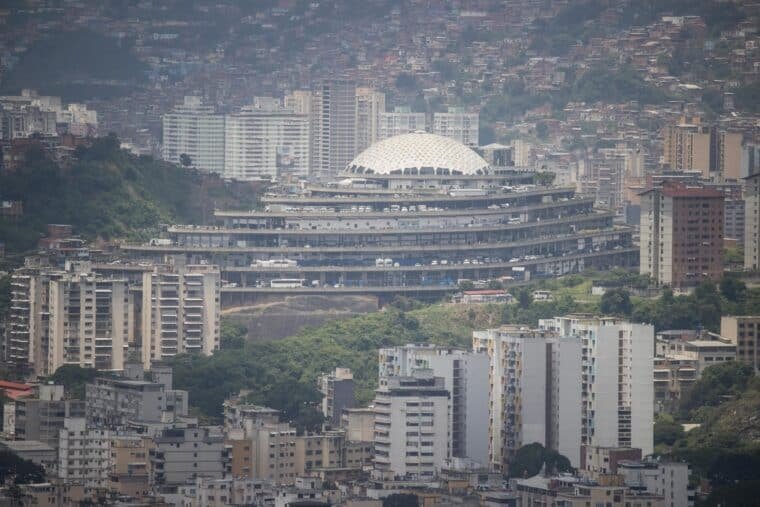
“El Helicoide is the place that changed my life. It’s where I truly understood whose hands I was in,” said Rosmit Mantilla, a Venezuelan political leader now living in exile, describing his time inside the detention center of Venezuela’s Bolivarian National Intelligence Service (SEBIN) in western Caracas.
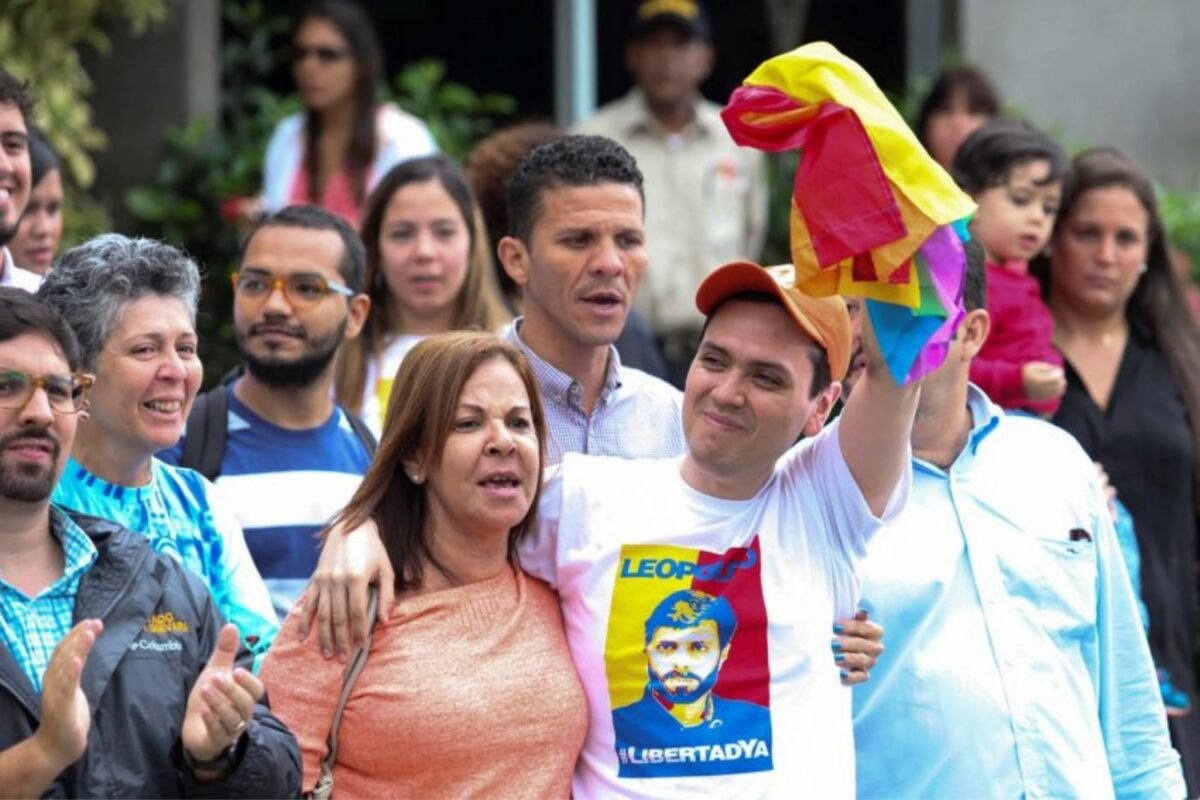
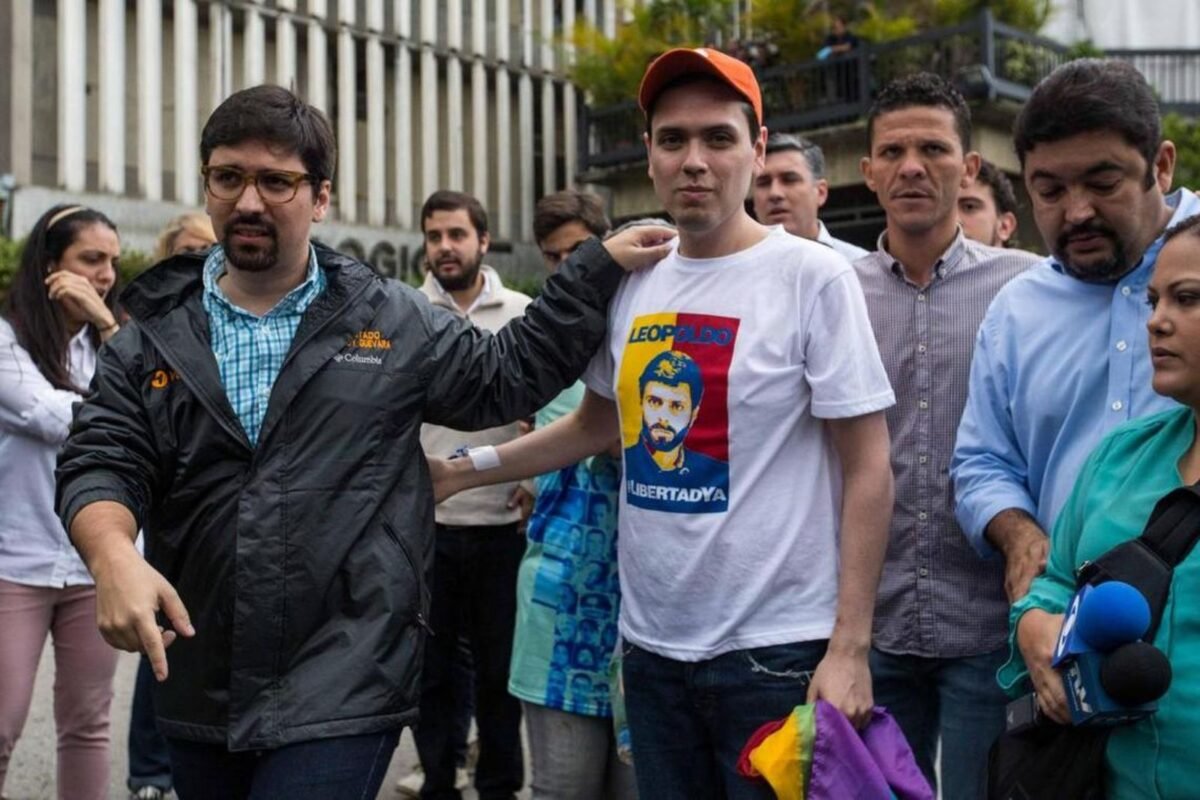
Mantilla was held at El Helicoide — SEBIN’s spiral-shaped intelligence headquarters that has long been accused by rights groups of torture and incommunicado detention — from May 2, 2014, until November 17, 2016, when he was released after undergoing surgery for a series of health complications.
“It was the place where I lived for two and a half years,” he told El Diario in an exclusive interview. “Imagine walking down the street and a man on a motorcycle tries to rob you. You run, you get home, and eventually the fear passes. Now imagine that fear never ends — that you live with that anguish for two and a half years.”
In 2014, dozens of Venezuelan opposition activists were jailed amid nationwide anti-government protests that intensified after February 12 of that year, when student-led demonstrations erupted in several cities. The protests lasted for months and left at least 43 people dead and more than 3,000 detained, according to official and human rights reports.
Mantilla was among those arrested.
The Venezuelan Public Prosecutor’s Office charged him with public incitement, intimidation, obstruction of public roads, arson of public and private property, violent damage and criminal association. Under Venezuelan law, those offenses carry a maximum sentence of six years in prison.
Human rights organization Amnesty International reported at the time that Mantilla’s detention was based in part on testimony from an anonymous accuser who alleged that he had received funds from a group of businessmen to finance protests in Caracas.
Authorities said that during a search of his home they allegedly found protest pamphlets calling for demonstrations against President Nicolás Maduro’s government, as well as envelopes containing money.
Mantilla and his relatives have repeatedly denied the accusations. They told Amnesty International that the evidence had been planted.
“They placed money inside envelopes and labeled them with the names of the public squares where protest camps had been set up,” Mantilla said.
A Chronicler of Torture at El Helicoide
For years, numerous accounts have emerged about torture at El Helicoide, including testimonies from survivors such as Antony Vegas, Villca Fernández and Dylan Canache. Rosmit Mantilla was not exempt from this reality during his detention. Although he clarified that he did not suffer physical torture himself, he said he endured psychological torment and used his time in confinement to document the testimonies of fellow inmates who, he says, endured severe punishment.
“Torture is state policy in Venezuela. I interviewed several detainees, including those involved in the Robert Serra case, those linked to the killing of Eliécer Otaiza, and the PoliChacao officers, and I realized the structure was exactly the same. The same method of apprehension, the same process of pushing them to such an extreme level of stress that they would begin to hallucinate,” Mantilla said.
Robert Serra, a lawmaker from the ruling Socialist Party (PSUV), was stabbed to death in Caracas in October 2014. Eliécer Otaiza, a former intelligence official and pro-government figure, was killed earlier that same year in a separate criminal case. The “PoliChacao” reference concerns a 2016 case involving municipal police officers from the opposition-leaning Chacao district who were detained and later accused of facilitating the killing of a government press official; several were held at El Helicoide and reported mistreatment during their detention.
He recalled that his prison colleagues agreed that guards, after forcing them through a process they called “agilamiento” — extreme exhaustion while blindfolded — and taunting them with comments about their families, would proceed to suggest that “they would cut their ears.”
“When they brought them to the most extreme level of stress, without even touching them yet, they would say: ‘We’re going to cut off your ears,’” Mantilla said. “They would use a finger or a pen, and these people, blindfolded and at such a level of stress, felt like their ears were detached and hot blood was running down their necks. But it never actually happened. I heard this from every person I interviewed.”
Mantilla also witnessed what he says were torture methods applied to other inmates; he even said he treated some who arrived in the cells covered in blood.
“They would lock them inside giant wooden crates, nail them shut, and leave those people there to starve for days, dying of hunger and confined with no sanitation,” he said.
He described another torture method used by agents at El Helicoide that prisoners called “the pulley.” This practice, he said, involved tying the victim’s hands above their head and suspending them so that their own body weight became the punishment.
Mantilla also said he saw guards administer electric shocks to many detainees, while female prisoners were beaten in the abdomen.
“They deliberately targeted the stomach with kicks,” he said. “They beat them to force false confessions and showed them photos of their relatives.”
During his time in prison, Mantilla also documented the testimony of the man identified as the mastermind behind the homicide of Robert Serra, who, Mantilla says, was held in a cell that officers completely covered so other prisoners could not see him. He recalled that the man complained of pain, and it was only out of curiosity — and by lifting the cloth covering the cell — that Mantilla was able to see him.
The political leader said he has the man’s testimony in writing, along with detailed accounts of the torture he suffered and the identities of those who beat him.
Torture, Extortion and Overcrowding
In his testimony, Mantilla reiterated the accounts of torture that other inmates shared with him, describing abuses ranging from psychological pressure — including threats against family members and sensory isolation — to what detainees called “white torture,” a method involving confinement in a brightly lit room with no external sound, and electric shocks.
“I think I was the only one of my generation who was never physically tortured,” he said. “Many would wake up with what felt like Stockholm syndrome, saying some police were ‘friendly,’ and for me that was unacceptable. My role was clear.”
Mantilla acknowledged that there were guards who did not participate directly in torture, but he said they engaged in extortion.
The activist described witnessing acts of extortion against businessmen detained at El Helicoide. According to his account, these inmates were allegedly charged large sums of money in U.S. dollars in order to purchase basic products. He also alleged that release orders or freedom documents were sold to detainees for amounts ranging between $3,000 and $4,000 — “and sometimes they never freed them,” Mantilla said.
Mantilla said that the massive influx of prisoners led to a severe overcrowding crisis inside El Helicoide. Authorities went from holding about 60 detainees per cell to cramming between 300 and 400 people into a single space, he said.
On one occasion, he recalled, a SEBIN commissioner read passages from the Book of Revelation in the Bible to him, while threatening his family and his fate in prison. Mantilla said this incident occurred after he and other political prisoners staged a hunger strike at El Helicoide to demand the transfer of comrades held in another SEBIN facility.
“At one point, together with my fellow inmates, I tried a hunger strike so they would remove Gerardo Carrero and Lorent Saleh from La Tumba [in SEBIN’s Plaza Venezuela facility],” Mantilla said. “After six hours of striking, a commissioner came and read the Bible to me.”
Release Triggered by a Health Crisis
Mantilla was suffering from gallbladder problems, and two months before his release his attorney requested that he be transferred to the private Urológico San Román Hospital in Caracas. Although the transfer was not granted within the timeframe requested by his defense, days later a guard informed him that he would be taken to the medical center, where he was able to see his lawyer, his parents and even his pet.
He said that during the consultation, a SEBIN officer entered the examination room and remained present throughout the medical evaluation. The specialist diagnosed him with gallstones and a urinary infection.
“The doctor performed an ultrasound, saw something on the screen and looked at me. He said, ‘We need to run two tests,’ and squeezed my hand tightly,” Mantilla recalled. “I didn’t understand the signal at the time — it meant I needed surgery, but he didn’t want to say it out loud so they wouldn’t prevent it. The police started getting nervous.”
According to Mantilla, authorities initially blocked the surgery and removed him from the hospital. From there, he recorded a video that went viral in 2016, climbing onto the SEBIN patrol vehicle that was taking him back to prison and shouting: “Long live Venezuela. They are dictators and murderers. We will not allow this. Long live Venezuela.”
After that episode, he was transferred to SEBIN’s Plaza Venezuela headquarters.
“There, a Cuban doctor examined me,” he said. “He told me, ‘Sign here stating that you are perfectly fine.’ Instead of signing, I wrote, ‘My doctor holds the truth.’ The man became aggressive.” Mantilla added that a commissioner then entered the room and attempted to physically assault him.
He was subsequently returned to El Helicoide and placed in solitary confinement.
“They improvised a cell in what looked like an identification room from the movies — with a glass window where people observe from the other side. I was placed on the side where suspects stand to be identified. Behind the glass there was another makeshift cell where they kept other detainees,” he said. “They put me there on a dirty mattress. There was no light. They wouldn’t let me use the bathroom. They wouldn’t let me take my medication. I thought, ‘I’m going to die here.’”
While held in isolation, he said he received support from other political prisoners in nearby cells, including Villca Fernández, who, along with others, demanded that authorities allow him access to food and bathroom privileges.
Mantilla acknowledged that authorities repeatedly tried to transfer him to the Military Hospital in Caracas for treatment, but he refused out of fear and insisted on being treated by his own physician at a private clinic.
“Every day they tried to take me to the Military Hospital, and I refused,” he said. “I would say, ‘I’m going to my clinic. If I go to the Military Hospital, there are Cuban doctors there and they’re going to kill me.’”
At one point, detainees in the adjacent cell managed to pass him a small earbud through a narrow opening between the cells. When he placed it in his ear, he heard a fellow activist urging him not to refuse medical care.
“She said, ‘Please don’t refuse to go to the Military Hospital anymore. We’re working so that you can be operated on and released,’” he recalled.
Authorities transferred Mantilla to the Military Hospital in Caracas on November 11, 2016. There, a specialist warned the guards about the severity of his condition — his gallbladder complications were already affecting his pancreas.
He was later moved to the Urológico San Román Hospital, following a request he said he made through one of the opposition politicians participating in that year’s dialogue talks between government and opposition leaders.
“I was operated on with police inside the operating room,” Mantilla said. “The hallway and the entire San Román hospital were surrounded by police. The doctors were deliberately extending my recovery time, waiting to see if something would happen,” he added, referring to the ongoing political negotiations at the time.
During his recovery, Mantilla said he remained in contact with a member of the dialogue commission. When communication stopped, he recorded another video warning that if SEBIN returned him to El Helicoide immediately after surgery, he would begin a hunger strike despite his fragile condition.
“I went into the bathroom and recorded a video saying: ‘If you see this video, it’s because they took me back to SEBIN right after surgery. I’m going on hunger strike.’ On the sixth day, already mentally prepared, I began to notice the patrol vehicles disappearing. I opened my room door and there wasn’t a single police officer in the hallway.”
From the hospital window, he said, he saw a SEBIN commissioner arrive and hand over a document to another official. That same day — November 17, 2016 — Mantilla was released after receiving a freedom order signed by SEBIN authorities.
Shortly after regaining his freedom, he said in an interview with journalist Fernando del Rincón: “Maduro stole my health, but not my will.”
Rosmit Mantilla’s Exile
Mantilla currently lives in France, where he has been based since 2017 after seeking political asylum there following his release from detention. He initially arrived in July 2017 intending to stay for only three months after receiving an invitation from the French National Assembly to speak about human rights conditions in Venezuela.
However, he decided to remain in France after members of the Venezuelan government named him on state television, putting him at risk if he returned home.
French lawmakers supportive of President Emmanuel Macron offered him assistance with his asylum application, which Mantilla accepted after watching Mujeres del caos venezolano (Femmes du chaos vénézuélien), a documentary by Franco-Venezuelan filmmaker Margarita Cadenas that featured the experiences of his grandmother while he was detained.
“I went to see the film the day they offered me asylum, and I saw my grandmother crying, because she (the filmmaker) went to my grandmother’s house, slept there, saw how my grandmother cooked for me and cried for my imprisonment, and I said, ‘I’m not going back,’” Mantilla said.
“It’s the Beginning of the End”
From exile, Mantilla interpreted the events of January 3 in Venezuela — when former President Nicolás Maduro was captured and taken out of the country following a U.S. military operation — as a turning point in the nation’s history.
“For me it meant the beginning of the end,” he said. “I saw it as an event, without having any expectation, but later I realized that they had taken Maduro out of government. People are discouraged, but there is a tremendously important fact: they removed Nicolás Maduro, and we are so surrounded by misfortunes that we have not understood it.”
Mantilla described the political transition following Maduro’s detention as “painful, slow and uncomfortable,” but argued that it has undermined not only narratives within the government ranks but also among political leaders who “appealed to dialogue and gave oxygen to the regime.”
“I think there were physical bombs that exploded, but there were also moral bombs that shattered many narratives and dismantled a system that has been operating for years — and when I say system, I don’t just mean Chavismo, but everything that Chavismo has corrupted,” he said.
He criticized opposition attitudes, including comments by some leaders suggesting that María Corina Machado’s time in hiding was a personal choice rather than a strategic political tactic. “That was shameful because the truth is that more than half of the opposition platform was underground,” he said.
From his home in France, Mantilla reaffirmed his support for opposition leader María Corina Machado, the 2025 Nobel Peace Prize laureate, and urged Venezuelans to maintain confidence, arguing that this is the first time in nearly 30 years that there is genuine hope for change.
Rosmit Mantilla’s testimony forms part of a broader body of documentation gathered over the past decade by human rights organizations, former detainees and international investigators describing patterns of torture and cruel treatment at El Helicoide.
This content includes translation, adaptation and contextualization performed using the artificial intelligence tool ChatGPT. The material was supervised, reviewed and edited by José Gregorio Silva, Editorial Coordinator at El Diario, and the editorial team. Learn more about our AI use policy here.
La entrada “Torture Is State Policy in Venezuela”: Rosmit Mantilla’s Testimony from Inside El Helicoide se publicó primero en El Diario Venezuela – elDiario.com.
